Professional flood damage cleanup follows a set sequence: a safety and damage assessment, standing water removal, removal of materials that can’t be saved, structural drying, cleaning and sanitizing, repairs, and a final inspection. Each stage protects the building and the people in it. Skipping or rushing one can leave moisture, contamination, or mold behind.
In Chicago, flooding can start with heavy rain, a basement that takes on water, a sewer backup, or a pipe that bursts in winter. This guide explains what happens at each stage, what affects how long cleanup takes, and what to do while you wait for help to arrive.
Why Professional Flood Damage Cleanup Is Important
Floodwater rarely stays where you can see it. It soaks into drywall, insulation, subfloors, and the cavities behind walls. A room can look nearly dry on the surface while materials underneath stay wet.
Delaying cleanup raises several risks:
- Hidden moisture behind walls and beneath flooring that keeps damaging materials after the visible water is gone.
- Contamination when floodwater or sewage carries bacteria and other harmful material into the property.
- Material damage to drywall, insulation, and structural components that absorb water.
- Mold growth and possible indoor air quality concerns when materials stay damp.
- Electrical and structural hazards that make flooded areas unsafe to enter.
A professional team has the equipment to find moisture you can’t see, the training to handle contaminated water safely, and a process that documents the work from start to finish.
What Happens During the Professional Flood Cleanup Process?
Every property is different, so the details vary. The core sequence below reflects how professional flood cleanup typically works and matches the stages Alliance Disaster Kleenup uses: inspection, water extraction, drying, cleaning, reconstruction, and final quality assurance.
Step 1. Emergency Response and Damage Assessment
Cleanup begins with a safety check. Technicians look for electrical hazards, structural concerns, and other unsafe conditions before work starts. They identify where the water came from and whether it is still entering the building.
They also assess the type of water involved. Rainwater seeping into a basement, a supply line leak, and a sewage backup call for different precautions. The more contaminated the water, the more protective measures the crew needs and the more materials may need to be removed.
The team records the affected areas and the visible damage. This documentation guides the rest of the job and can be useful for insurance purposes.
Step 2. Standing Water Removal and Extraction
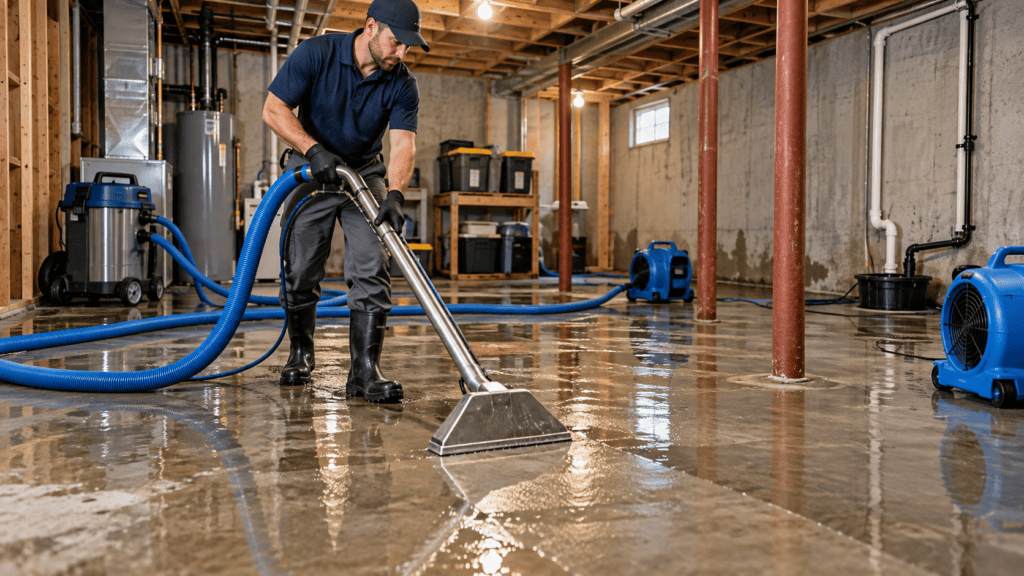
Once the area is safe, the crew removes standing water. Pumps handle larger volumes, and extraction equipment and specialized vacuums remove water from floors, carpeting, and low areas.
Fast water extraction matters because every hour that water sits, more of it moves into porous materials. Removing the bulk of it early reduces how much moisture the drying stage has to deal with.
Step 3. Removal of Damaged Materials
After the water is out, technicians decide which materials can be dried and cleaned and which can’t be saved. Items that often fall into the second group include:
- Carpet and padding that absorbed contaminated water
- Wet insulation
- Drywall that has soaked up water or been exposed to sewage
Removing these materials gives air access to wall cavities and subfloors and prevents contaminated or waterlogged materials from continuing to cause problems. This step often surprises property owners, but it is usually necessary for a safe, complete cleanup.
Step 4. Structural Drying and Dehumidification
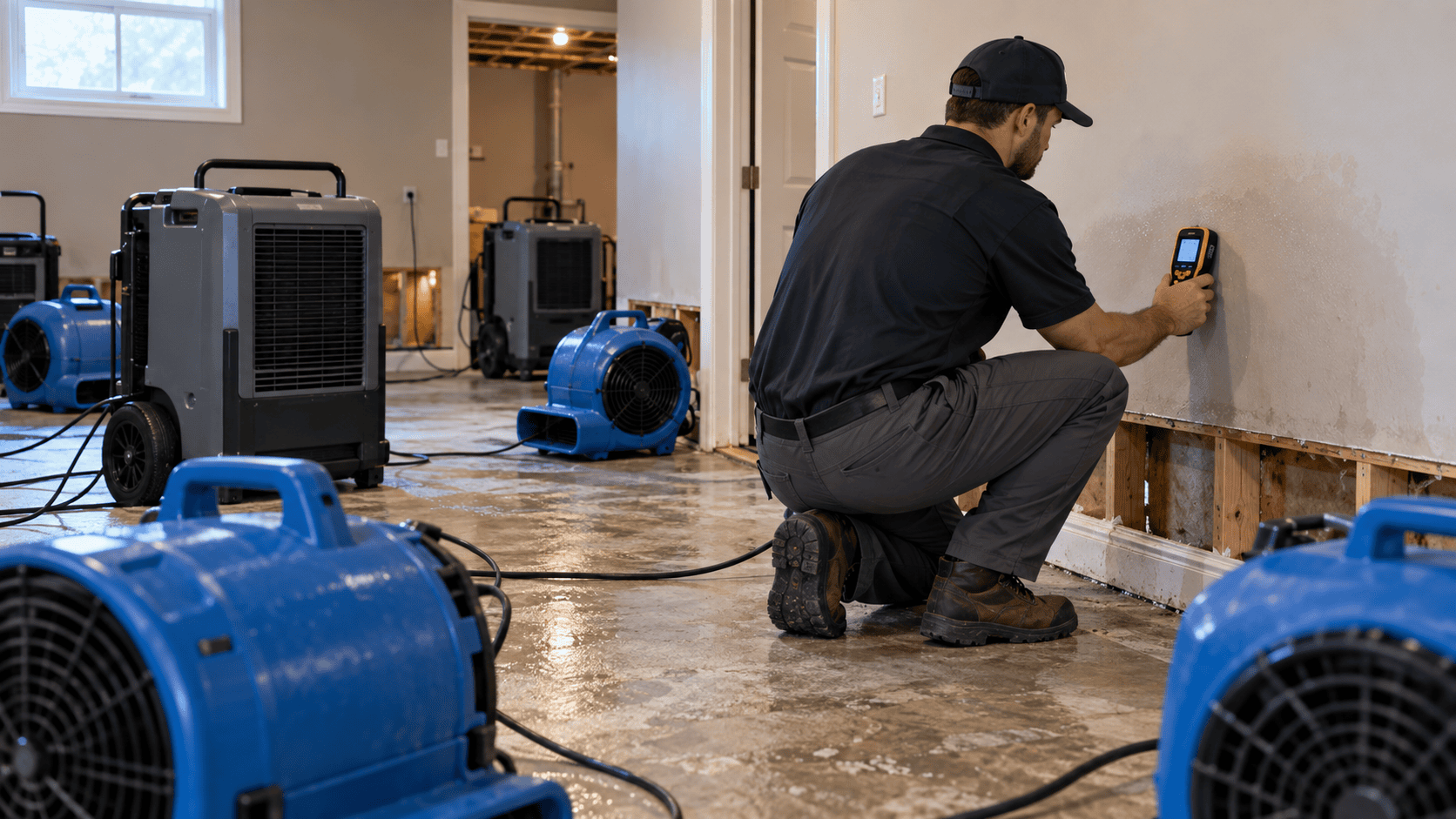
Drying is where much of the technical work happens. Crews place air movers and dehumidifiers to pull moisture out of the structure and the air. They use moisture meters to measure what is still wet and track progress over several visits.
Drying records show whether moisture levels are dropping as expected. Equipment placement and the length of drying depend on the conditions in your property, including how contaminated the water was and whether it is safe to run equipment in certain areas. Professional flood cleanup relies on measured results rather than on whether a surface feels dry to the touch.
For help with the full service, see Alliance Disaster Kleenup’s page on professional flood damage cleanup.
Step 5. Cleaning, Sanitizing, and Mold Assessment
With the structure drying, technicians clean and, where appropriate, disinfect salvageable surfaces and belongings. Contaminated materials are handled and disposed of with care to avoid spreading contamination to clean areas.
The team also checks for signs of mold growth. If damp conditions have lasted, mold can already be present. Identifying it early helps determine whether further steps are needed before repairs begin.
Step 6. Restoration and Reconstruction
When the structure is dry and clean, repairs can begin. Depending on the damage, that may include replacing drywall, installing new flooring, painting, and other structural work. A company that handles both cleanup and reconstruction can keep the project under one plan instead of handing the property from one contractor to another.
Step 7. Final Inspection and Documentation
The last step confirms that the work is complete. The team verifies moisture levels, reviews completed repairs, and finalizes the records of the damage and the work performed. Those records can support conversations with your insurance provider.
How Long Does Professional Flood Cleanup Take?
There is no fixed timeline, and any company that promises one before seeing the property should be treated with caution. The main factors are:
- How much standing water there is
- The type and level of contamination
- Which materials were affected
- How far hidden moisture has spread
- How much cleaning and reconstruction is needed
Structural drying often takes several days. Repairs and reconstruction can extend the project well beyond that, especially if walls, flooring, or other structural elements need to be replaced. An on-site assessment is the only reliable way to estimate the timeline for a specific property.
What Should Chicago Property Owners Do Before Cleanup Begins?
The hours before a crew arrives matter. If it is safe to do so:
- Stay out of areas with possible electrical or structural hazards.
- Avoid direct contact with floodwater, especially if sewage may be involved.
- Do not operate electrical equipment or appliances in flooded areas.
- Stop the water source, but only if you can do it safely.
- Document visible damage with photos or video from a safe location.
- Contact your insurance provider to report the loss.
- Arrange a professional damage assessment.
If you are unsure whether an area is safe, treat it as unsafe and wait for a professional evaluation.
Common Causes of Flood Damage in Chicago
Heavy Rainfall and Basement Flooding
Intense rain can overwhelm drainage around a property and push water into basements through floors, walls, and window wells. Because basements are below grade, water collects there and can reach finished spaces quickly.
Sewer Backups and Drainage Problems
When drains or sewer lines back up, the water coming into the property may be contaminated. This type of flooding calls for added precautions, and porous materials that contact it often cannot be salvaged.
Frozen or Burst Pipes
Winter cold can cause pipes to freeze and split, releasing water inside walls, ceilings, and floors. Because the break may go unnoticed for a time, the damage can spread before anyone sees it.
Storm-Related Water Intrusion
Storms can damage roofs, windows, and other openings, letting rain into the building. If you’re dealing with water damage from any of these sources, Alliance Disaster Kleenup also offers water damage restoration in Chicago.
When Should You Call a Flood Damage Cleanup Company?
Call a professional when you see any of the following:
- Substantial standing water
- Water that may be contaminated, such as a sewage backup
- Moisture that keeps returning or won’t dry
- Water near electrical systems or outlets
- Damaged drywall, flooring, or other building materials
Alliance Disaster Kleenup provides emergency response and flood restoration for residential and commercial properties. Calling early gives the team more opportunity to limit how far the damage spreads.
Frequently Asked Questions
What Is the First Step in Flood Damage Cleanup?
The first step is a safety and damage assessment. Technicians check for electrical and structural hazards, find the water source, evaluate contamination, and document the damage before extraction begins.
Can Flood Damage Cause Mold Growth?
Yes. Mold can develop when materials stay damp, and it may grow in hidden areas such as wall cavities. Prompt water removal and thorough drying lower the risk, and a professional can assess whether mold is present.
How Long Does It Take to Dry a Flooded Basement?
Drying often takes several days, but the exact time depends on the amount of water, the materials affected, and the level of contamination. Moisture readings, not appearance, show when drying is complete.
Does Homeowners Insurance Cover Flood Cleanup?
It depends on the policy and the cause of the loss. Flood coverage is often separate from standard homeowners coverage, and sudden internal plumbing losses may be treated differently. Contact your insurance provider and review your policy.
Can Furniture and Flooring Be Saved After Flooding?
Sometimes. Items exposed to clean water and dried quickly have a better chance. Porous materials such as carpet padding, and anything exposed to sewage, often cannot be safely saved. A technician can assess each item.
Get Professional Flood Damage Cleanup in Chicago
Flood damage cleanup works best when each stage is done properly: assessment, water removal, drying, cleaning, and restoration. Missing hidden moisture or contamination can lead to repeat damage and further repair costs.
Alliance Disaster Kleenup offers 24/7 emergency response, trained technicians, residential and commercial cleanup, and reconstruction services, so one team can guide a project from first response through repairs.
If your property has been affected by flooding, contact Alliance Disaster Kleenup at 847-205-2100 to talk through your situation and arrange an assessment.